


The best men’s running shorts are the ones you stop thinking about once the run starts.
They should feel light, stay secure, dry quickly, and reduce friction through repeated stride movement. For warm-weather running, these details become even more important. Sweat, heat, and distance can turn a small fit issue into a real distraction.
This guide explains how to choose men’s running shorts based on the features that matter most: fabric, fit, inseam length, anti-chafe construction, and pocket placement.
What should you look for in men’s running shorts?
A good pair of running shorts should support movement without adding bulk.
The most important features are:
- Lightweight technical fabric
- Quick-drying performance
- Smooth seam construction
- Secure waistband fit
- Enough mobility through the hip and thigh
- Stable storage for small essentials
Running shorts should not feel heavy after sweating. They should not bunch at the inner thigh, pull at the waistband, or bounce when carrying keys, cards, or gels.
For runners training in hot weather, less distraction is often the real performance benefit.
Why do running shorts cause chafing?
Chafing usually happens when moisture, friction, and repeated movement meet.
Common causes include:
- Fabric that holds too much sweat
- Seams placed in high-friction areas
- Shorts that are too loose and bunch during movement
- Shorts that are too tight and create pressure
- Liners that rub against the skin
- Heavy pockets that pull the shorts out of position
This is why anti-chafe construction matters. It is not just about softness. It is about how the shorts behave after the body heats up and the fabric starts moving with sweat.
A good anti-chafe running short should feel smooth through repeated stride cycles, especially around the inner thigh, waistband, and liner area.
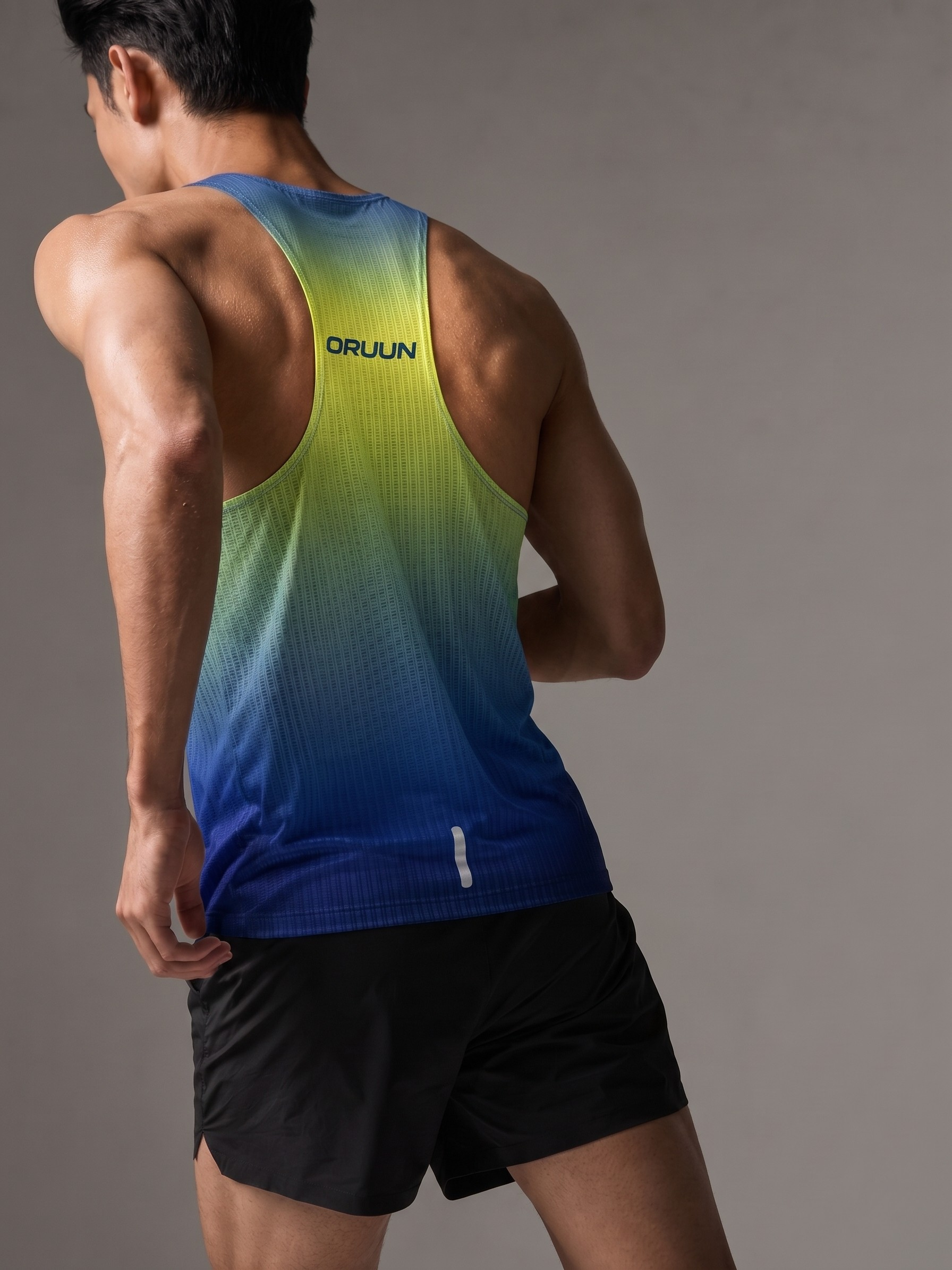
ORUUN approaches this through a low-bulk construction built around movement, heat, and repeated friction rather than adding unnecessary design details.
What fabric is best for running shorts?
Most performance running shorts use synthetic technical fabrics such as polyester, nylon, or elastane blends. These fabrics are used because they can feel lighter, dry faster, and manage sweat better than cotton.
Cotton is comfortable when dry, but it absorbs moisture and can become heavy during running. In humid or hot conditions, that extra moisture can increase cling and friction.
For running, look for fabric that is:
- Lightweight
- Quick drying
- Breathable
- Smooth against the skin
- Flexible enough for stride movement
- Stable after repeated washing
The goal is not just comfort when you first put the shorts on. The goal is comfort after sweat, heat, and distance.

Are back pockets better than side pockets for running?
For running, a secure back pocket is often better than loose side pockets.
Side pockets can work well for casual wear, but during a run they may bounce, swing, or pull the shorts unevenly. This is especially noticeable when carrying keys, cards, gels, or a phone.
A rear zip pocket keeps small essentials closer to the body’s center line. This can help reduce bounce and keep the shorts feeling more stable.
The best pocket design for running is usually:
- Zipped
- Close to the body
- Not oversized
- Positioned to reduce bounce
- Large enough for essentials, but not so large that it adds bulk
ORUUN running shorts use a secure back zip pocket for small essentials such as keys, cards, and energy gels. The idea is simple: carry what matters without turning the shorts into storage shorts.
What inseam length is best for men’s running shorts?
Men’s running shorts usually range from 3 inches to 7 inches.
There is no single perfect inseam. The right choice depends on your climate, distance, body type, and how much coverage you prefer.
| Inseam | Best for | Feel |
|---|---|---|
| 3–4 inches | Racing, speed work, very hot weather | Minimal and fast |
| 5 inches | Daily running, warm weather, mixed training | Balanced |
| 6–7 inches | Gym, travel, more coverage, casual wear | More versatile |
Shorter shorts usually offer more airflow and leg freedom. Longer shorts offer more coverage and can feel easier to wear outside pure running contexts.
For many runners, a 5-inch or mid-length running short offers the best balance between freedom, coverage, and daily usability.
Should running shorts be tight or loose?
Running shorts should feel secure, but not restrictive.
If they are too loose, fabric can bunch and cause friction. If they are too tight, they may dig into the waist, restrict stride movement, or create pressure points.
A good running fit should:
- Stay in place at the waist
- Move freely through the hip
- Avoid bunching at the inner thigh
- Feel stable during strides and high knees
- Stay comfortable after sweating
Before committing to a pair, test the movement. Do a few lunges, high knees, or short accelerations. If the shorts shift too much before the run even starts, they will likely become distracting over distance.
Do running shorts need a liner?
Many runners prefer shorts with a built-in liner because it can reduce the need for extra layers and help stabilize the fit.
A good liner should feel smooth, supportive, and breathable. It should not rub, ride up, or hold too much moisture.
However, liner preference is personal. Some runners prefer a built-in brief liner. Others prefer a compression liner or wearing separate running underwear.
The key is the same: the liner should reduce friction, not create it.
What are the best running shorts for hot weather?
For hot weather, choose running shorts that prioritize airflow, quick drying, and low weight.
Look for:
- Lightweight fabric
- Short to mid-length inseam
- Breathable construction
- Minimal bulk
- Smooth internal finishing
- Secure but low-profile pockets
Hot-weather running makes every extra gram more noticeable. When the body is already dealing with heat and sweat, shorts should not add cling, weight, or irritation.
This is where ORUUN’s design direction fits naturally: lightweight running apparel built for the body in heat, with fewer distractions and cleaner movement.
What are the best running shorts for long runs?
For long runs, comfort becomes more important than almost anything else.
A pair of shorts may feel fine for 2 km but start rubbing after 12 km. That is why seam placement, waistband pressure, liner comfort, and pocket stability matter more as distance increases.
For long-distance running, choose shorts with:
- Anti-chafe construction
- Stable waistband
- Secure storage
- Lightweight quick-dry fabric
- No heavy seams in high-friction zones
- Minimal bounce when carrying essentials
A secure rear zip pocket is especially useful for long runs because it gives you a place for keys, cards, or gels without creating side-pocket swing.

Can running shorts be used for gym and travel?
Yes, depending on the design.
Pure race shorts may feel too minimal for gym sessions or travel days. Hybrid-style running shorts can work better across different scenarios because they provide more coverage and practical storage while still feeling light enough for running.
Good run-to-daily shorts should be:
- Lightweight enough for training
- Clean enough for casual movement
- Flexible enough for gym work
- Secure enough for small essentials
- Simple enough to avoid looking over-designed
This is one reason many runners prefer performance shorts with a clean silhouette and one secure pocket rather than multiple bulky compartments.
How to prevent chafing in running shorts
To reduce chafing, start with the right shorts and the right fit.
Practical steps:
- Choose quick-drying technical fabric
- Avoid shorts that bunch at the inner thigh
- Look for smooth seams or low-friction construction
- Test new shorts on shorter runs first
- Avoid overdressing in hot weather
- Use anti-chafe balm for very long runs or humid conditions
- Wash technical shorts properly to maintain fabric performance
Chafing is not always a sign that you need tighter shorts. Sometimes the issue is poor fabric behavior, seam placement, or moisture retention.
The best anti-chafe running shorts reduce the conditions that create friction in the first place.
How to wash running shorts
Technical running shorts last longer when washed carefully.
Recommended care:
- Wash cold
- Use mild detergent
- Avoid fabric softener
- Do not bleach
- Do not tumble dry
- Do not iron
- Air dry in a ventilated place
Fabric softener can affect moisture management, and heat can damage elastic fibers. Air drying helps preserve the structure, fit, and performance feel of running shorts.
FAQ
What are the best men’s running shorts for chafing?
The best men’s running shorts for chafing use lightweight technical fabric, smooth construction, and a stable fit that does not bunch during movement. Anti-chafe design is especially important for hot weather and longer runs.
Are back pockets good for running shorts?
Yes. A secure back zip pocket is useful because it keeps small essentials closer to the body’s center line. This can reduce bounce compared with loose side pockets.
What should I carry in running shorts?
Most runners carry small essentials such as keys, cards, energy gels, or a small accessory. For larger phones, always check the pocket dimensions and test stability before running.
Are lightweight running shorts better for summer?
Lightweight running shorts are usually better for summer because they dry faster, feel less clingy, and reduce unnecessary fabric weight during hot or humid runs.
Should running shorts have side pockets?
Side pockets are useful for casual wear, but they are not always ideal for running. If they are too loose or deep, they can bounce. For running performance, a secure zipped pocket is usually more stable.
What makes ORUUN running shorts different?
ORUUN focuses on lightweight movement, anti-chafe comfort, and secure storage without unnecessary bulk. The shorts are designed for runners who want breathable performance, reduced friction, and a secure back pocket for small essentials.



Share:
Half Marathon Prep: What to Wear, Train, and Test Before Race Day