



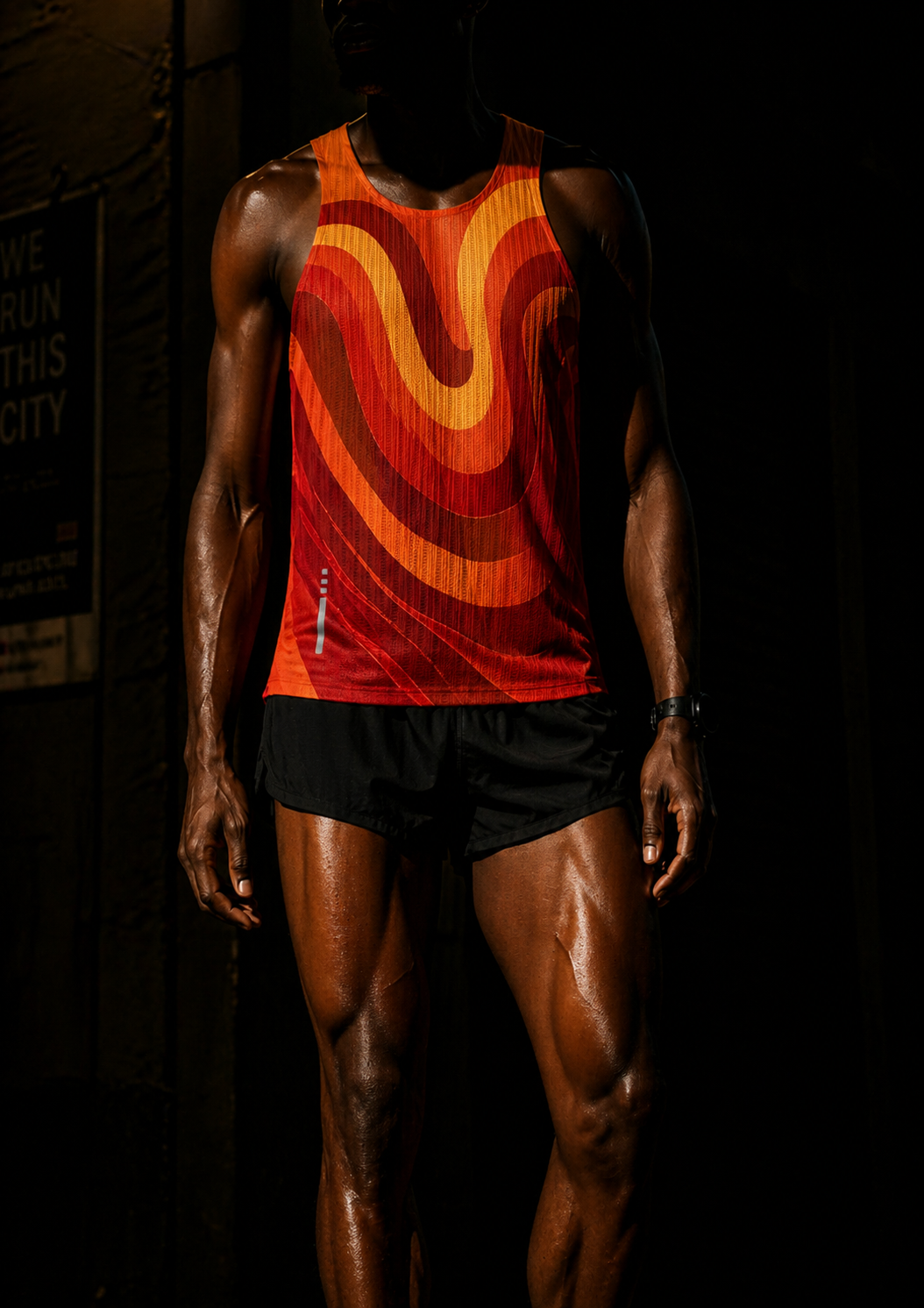
Chafing happens when friction + sweat + fabric combine.
The most effective way to prevent it is to reduce friction at the source — using lightweight, breathable, low-retention running gear.
What Causes Chafing When Running
Chafing isn’t random. It’s predictable.
1. Friction
Repeated skin-to-fabric contact:
- inner thighs
- underarms
- chest (nipple chafing)
2. Sweat (the biggest trigger)
Sweat:
- softens skin
- increases friction
- makes fabric stick
More sweat = more damage
3. Poor Fabric & Fit
Bad gear:
- holds moisture
- moves too much
- creates hotspots
Where Chafing Happens Most
- inner thighs
- nipples
- underarms
- waistband
Long runs = higher risk
How to Prevent Chafing
1. Reduce Friction First
The real solution isn’t creams — it’s less movement + less moisture.
Look for:
- smooth fabric
- minimal seams
- lightweight construction
2. Wear Lightweight, Breathable Gear
Heavy or wet fabric:
- sticks to skin
- increases rubbing
Lightweight systems:
- dry faster
- move less
- reduce friction buildup
This is the biggest long-term fix.
3. Keep Skin Dry
- choose fast-drying materials
- avoid high sweat retention fabrics
Less moisture = less irritation.
4. Use Anti-Chafing Protection
For longer runs:
- anti-chafe balm
- petroleum jelly
Works short-term, but doesn’t fix the root cause.
5. Choose the Right Fit
- too loose → movement friction
- too tight → pressure + rubbing
Balanced fit = best
Why Most Running Gear Fails
Many shirts and shorts:
- absorb sweat
- get heavier mid-run
- stick to skin
friction increases over time, not at the start
How Modern Running Systems Reduce Chafing
Newer designs focus on:
Low Retention Fabric
- less sweat absorption
- less stickiness
Ultra-Light Construction (~43g)
- less material contact
- less movement friction
Airflow Zones
- reduce heat buildup
- keep skin drier
Result:
- less rubbing
- more stable movement
- reduced irritation over distance

Comparison: Traditional vs Optimised Running Gear
| Factor | Traditional Gear | Optimised Lightweight Gear |
|---|---|---|
| Sweat retention | High | Low |
| Friction over time | Increases | Stable |
| Fabric movement | High | Reduced |
| Chafing risk | High | Lower |
When Chafing Becomes a Serious Problem
You should take it seriously if:
- skin breaks or bleeds
- irritation lasts after runs
- happens every session
That’s not normal — it’s a gear issue.
Final Thought
Chafing isn’t just about skin.
It’s about heat, moisture, and friction interacting.
Fix those, and you fix chafing.
Explore Low-Friction Running Gear
https://www.oruun.com/collections/performance-tops
FAQ
What is the main cause of chafing when running?
Friction combined with sweat and fabric movement.
How do I stop inner thigh chafing when running?
Use anti-chafing products and wear lightweight, low-friction clothing.
Do lightweight running clothes reduce chafing?
Yes. They reduce sweat retention and fabric movement, lowering friction.
Share:
Why Running Shirts Smell Even After Washing
Nike vs Lululemon vs ORUUN: Which Running Shirt Is Actually Better?