

Preparing for a half marathon is not only about running more kilometres.
A half marathon is long enough to expose every small mistake: the shirt that starts to cling, the seam that rubs, the shorts that ride up, or the shoes that feel different after 15 km. That is why proper half marathon prep should include more than a training plan.
It should include your pacing, nutrition, hydration, recovery, shoes, socks, and race-day apparel.
The goal is simple: arrive at the start line with fewer unknowns and fewer distractions.
For many runners, 21.1 km is the distance where small details become big. A top that feels fine during a short run may feel heavy once sweat builds. A minor rubbing point can become painful before the finish line. Good half marathon preparation helps you find and fix those problems before race day.
What Is Half Marathon Prep?
Half marathon prep is the process of preparing your body, gear, and race-day routine for a 21.1 km run.
It usually includes:
- building consistent weekly mileage
- completing long runs
- practising race-day pacing
- testing nutrition and hydration
- choosing the right shoes and socks
- selecting comfortable running apparel
- preventing chafing and overheating
- avoiding new gear on race day
Most runners think half marathon preparation is only about distance. But your race-day experience also depends on how well your gear performs over time.
A half marathon is not short enough to ignore discomfort. You need gear that supports your rhythm without becoming another thing to manage.
Half Marathon Prep Checklist
Use this checklist before your next race.
6–8 Weeks Before Race Day
Start building consistent weekly mileage.
Add one longer run each week.
Choose your main running shoes.
Begin testing different tops, shorts, and socks.
Pay attention to any rubbing, heaviness, or overheating.
3–4 Weeks Before Race Day
Do longer runs in your planned race-day gear.
Practise your target pace.
Test hydration and fuel.
Notice how your clothing feels once wet.
Fix any chafing or comfort issues now.
1–2 Weeks Before Race Day
Make your final gear decisions.
Do not introduce new shoes, socks, or apparel.
Check the expected race-day weather.
Prepare your outfit, watch, fuel, and accessories.
Race Morning
Wear only tested gear.
Avoid unnecessary layers.
Start controlled.
Let the first few kilometres feel comfortable.
Trust your preparation.

What to Wear for a Half Marathon
Choosing what to wear for a half marathon depends on the weather, your pace, your body, and your personal comfort.
The basic rule is simple:
Wear gear you have already tested during training.
A strong half marathon outfit usually includes:
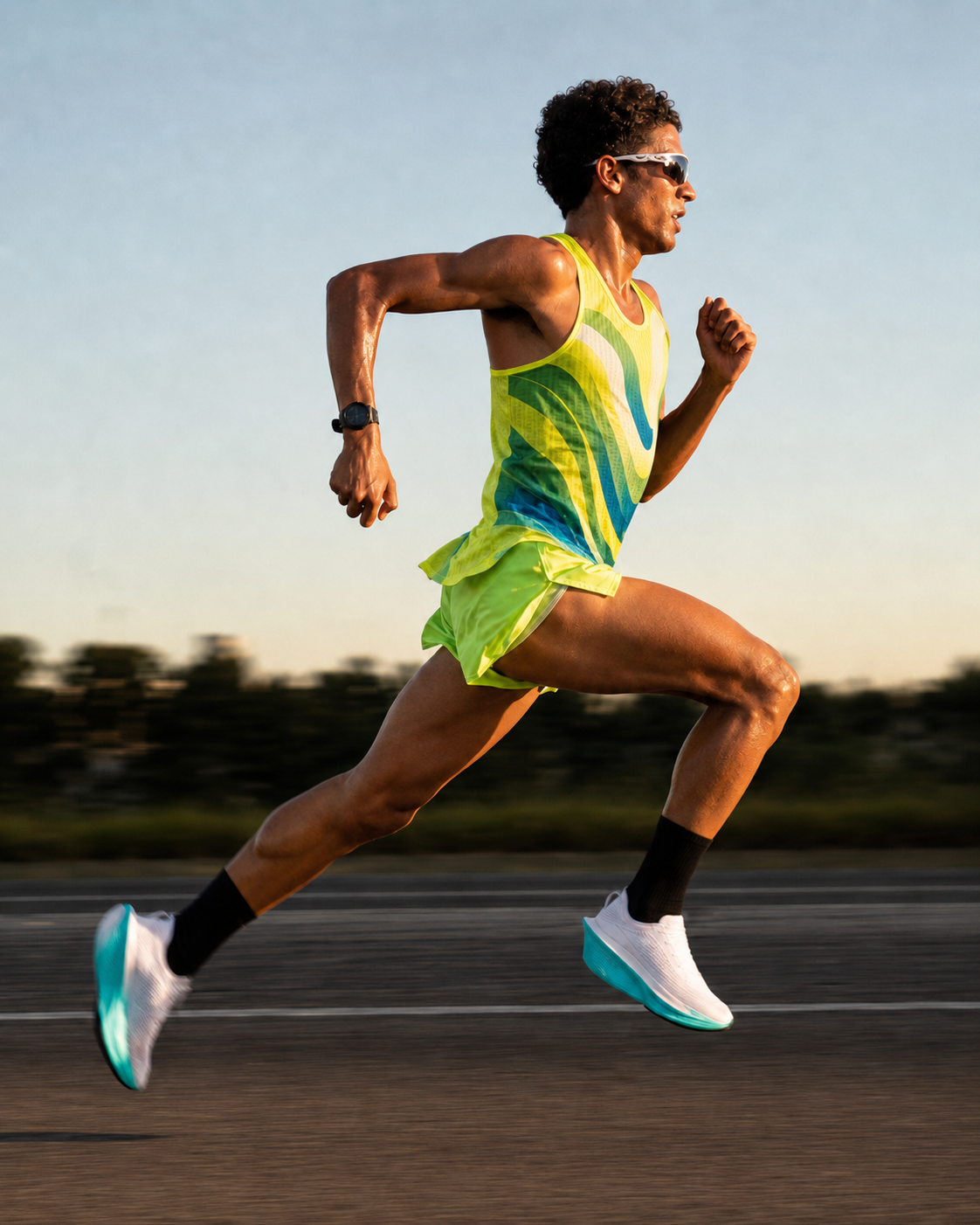
- a lightweight running singlet or breathable running shirt
- running shorts or half tights
- tested running socks
- reliable running shoes
- optional cap or sunglasses
- anti-chafe protection if needed
- race belt or storage if carrying gels
Your clothing should not feel restrictive. It should not trap heat. It should not become heavy when wet. It should not rub after repeated movement.
A half marathon is long enough for poor apparel choices to become distracting.
Should You Wear a Singlet for a Half Marathon?
A running singlet can be a strong choice for a half marathon, especially in warm weather, humid conditions, or faster race efforts.
Compared with a standard running shirt, a singlet usually offers:
- better airflow around the shoulders and arms
- less fabric coverage
- reduced heat build-up
- greater freedom of movement
- a lighter race-day feel
However, not every singlet performs the same.
For half marathon prep, the best running singlet should be lightweight, breathable, and comfortable over longer distances. It should move naturally with your body and reduce friction around common irritation zones like the chest, back, shoulders, and underarms.
A good singlet is not just a smaller shirt. It is a performance layer designed to stay out of the way.
Why Lightweight Running Apparel Matters
Lightweight running apparel matters because a half marathon gives weight and moisture time to accumulate.
A shirt may feel light before the race. But once sweat builds, some fabrics begin to feel heavier, clingier, and warmer against the skin. That added sensation can affect comfort and focus.
For runners, lightness is not only a number on a product page. It is a feeling during movement.
A truly lightweight running top should feel light:
- when dry
- when wet
- during easy running
- during faster efforts
- after repeated movement
- late in the race
This is why ORUUN approaches lightness as a complete running experience, not just a fabric description.
The goal is not simply to make apparel lighter in the hand. The goal is to make it feel less noticeable on the body.

How to Prevent Chafing During a Half Marathon
Chafing is one of the most common race-day problems for runners.
It usually happens when moisture, friction, heat, and repeated movement combine. During a half marathon, even a small rubbing point can become painful over time.
Common chafing areas include:
- underarms
- chest
- nipples
- lower back
- waistband
- inner thighs
- shoulders
To prevent chafing during half marathon prep:
- Test your full race-day outfit on long runs.
- Avoid cotton or heavy moisture-holding fabrics.
- Choose smooth, low-friction running apparel.
- Make sure your top does not twist, bunch, or cling.
- Use anti-chafe balm on known irritation areas.
- Avoid wearing new apparel on race day.
The best solution is prevention.
If your clothing causes friction during training, do not assume it will be fine during the race.
What Not to Do Before a Half Marathon
Good half marathon prep also means avoiding common mistakes.
Do Not Wear New Gear on Race Day
New apparel may look good, but race day is not the time to test it. Shoes, socks, shorts, singlets, gels, and even watches should all be tested before the race.
Do Not Overdress
You may feel cold at the start, but your body temperature will rise once you begin running. Choose apparel based on how you will feel after 15 to 20 minutes of effort.
Do Not Ignore Small Discomfort During Training
If something rubs during a long run, fix it before race day. Small irritation often becomes worse over 21.1 km.
Do Not Choose Apparel Only by Appearance
Style matters, but performance matters more after 15 km. The best race-day gear should look sharp and perform quietly.
Do Not Forget Moisture Behaviour
A top that holds sweat may feel heavier and more distracting as the race continues. Breathability matters, but quick-drying comfort matters too.
The ORUUN Approach to Half Marathon Gear
ORUUN is built for runners who want less distraction from their gear.
For a half marathon, your apparel should support the effort without demanding attention. It should feel light, breathable, and free in motion. It should help reduce the small discomforts that build across 21.1 km.
That is why ORUUN focuses on:
- lightweight construction
- breathable performance materials
- reduced garment burden
- movement freedom
- race-ready comfort
- a cleaner, more distinctive running aesthetic
The best running gear is not the gear you think about during the race.
It is the gear you forget you are wearing.
Final Thoughts: The Best Half Marathon Gear Gets Out of the Way
Half marathon prep is about more than finishing the distance.
It is about preparing for the full race experience: the early control, the middle rhythm, the late fatigue, and the small details that either support you or distract you.
Train consistently.
Test your race-day outfit.
Choose lightweight, breathable apparel.
Prevent chafing before it starts.
Avoid anything new on race day.
A half marathon is long enough for every detail to matter.
The right gear will not run the race for you. But it can help you stay focused on what matters most: your pace, your breathing, and the road ahead.
Share:
Nike vs Lululemon vs ORUUN: Which Running Shirt Is Actually Better?
How to Choose Men’s Running Shorts for Hot Weather, Chafing and Secure Storage